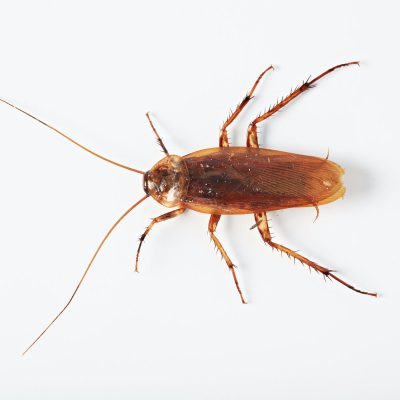
These roaches surface from sewage drains and are known to spread diseases.
Identify
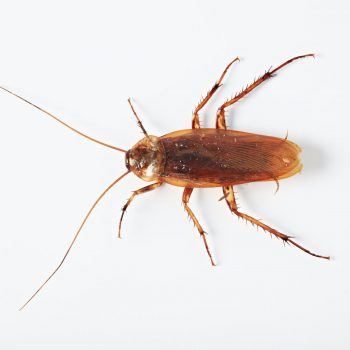
30-45mm long
Can climb rough but not smooth vertical surfaces. Males have functional wings where the females develop wings but cannot fly.
Life Cycle & Habitat
The female does not carry the capsule for long before placing it. Primarily found in drains and sewage systems. Unlike their German cousins, Americans are not social, leaving their young to fend for themselves.
How to Spot an American
Commonly found dead in and around drains and sewage infrastructure.
Americans can fly, so don’t be surprised when you find one upstairs at home or in the office.
Germans
Blatella Germica
Be careful of what you bring into your home, these cockroaches tend to travel with packaging materials.
Identify
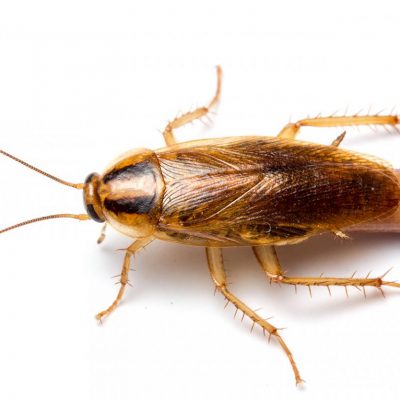
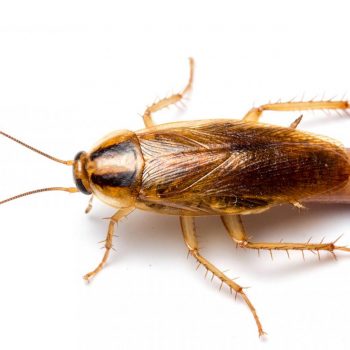
10-15mm long
Yellowish-brown with two longitudinal dark marks on pronotum.
Can readily climb rough and polished vertical surfaces.
Life Cycle & Habitat
They may be found almost anywhere that food, moisture and a good hiding place exist.
Female carry the capsule until just before the eggs hatch.
How to Spot a German
Germans leaves behind dropping that looks like fine black pepper. Usually located in the front corners of cupboards, fridge doors (rubber) and hinges.
Females carry an egg capsule which she can carry until before the eggs hatch. Traces of egg capsule are a clear sign of a potential infestation.
Orientals
Blattella Orientalis
Identify
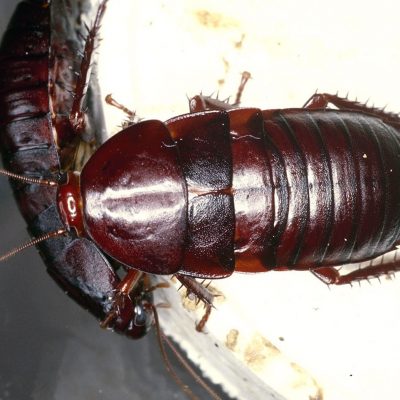
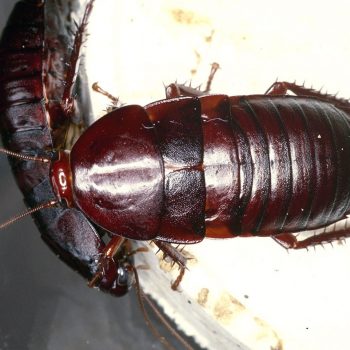
22 – 27 mm long.
Dark brown and black in colour.
Males have wings and females have nonfunctional wings.
Life Cycle
Females may carry the egg sack for 12 hours to 5 days when it is placed.
Females do not assist their young.
Nymphs can take up to a year to reach adulthood.
How to Spot an Oriental
Orientals thrive in dark cold places such as basements and drains.
They feed mostly on sewage, garbage and organic matter.