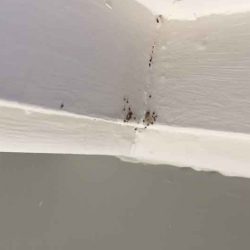
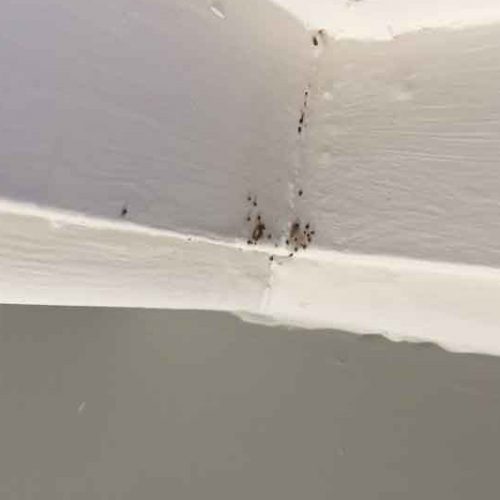
Bed Bugs & Bird Mites

Mites generally feed off of warm blooded animals, which includes humans.

Bed Bugs

Bird Mites

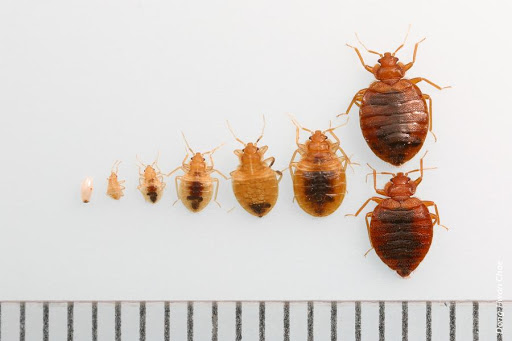
Bed Bugs

Cimex Lectularius

These pesky insects usually visit their host for a brief feed in the early hours just before dawn. 

Identify

  • Bites marks after waking up in the morning.
  • Bite marks are generally small, itchy red bumps that can be found in clusters on the human body.

Life Cycle

  • An adult female that feeds regularly can lay 2 to 3 eggs per day.
  • Eggs are laid there where they rest (safe harbourage).
  • Larvae will have to consume a blood meal per week to complete each of its 5 to 6 moulting stages.
  • Eggs can stay dormant until they pick up the vibrations of people (host) walking before they hatch*.

Habitat

  • Bed bugs are migratory arachnids. They can cling to a host, bedding and mattresses travelling to and infesting a new location.
  • Bed bugs can migrate   via people, bedding and mattresses. 
  • These insects are nocturnal and exclusively consume blood meals from humans.
  • Bed bugs hide in the tiny cracks and crevices of bed boards and mattresses.

Bird Mites

Dermanyssus Gallinae
bird mites pest control

These pesky insects usually visit their host for a brief feed in the early hours just before dawn. 
Identify

  • Bite marks on the body after a nights sleep.
  • Bite marks are generally located in clusters there where clothes have been worn. Bite marks may also appear on arms and legs. 

Life Cycle

  • Eggs hatch in three days.
  • The nymph will need to consume a blood meal at each stage of its life cycle.
  • Females lay their eggs away from the host, like nests and the folder corners of mattresses. 

Habitat

  • These pests consume blood meals from birds, rodents, mice and other mammals like humans.
  • Mites are found in the nests of birds like pigeons, starlings and swallows.
  • Nests in your roof may cause the mites  to migrate In search of a blood meal other than the hosts in the nest.