Fly Control

Fly Species

Flies are a bothersome pest that can easily spread diseases from decaying meat and animal faeces.

Bottle Fly

Horse Fly

Drain Fly

House Fly

Stable Fly

Blue Bottle Fly

Drain Fly

Horse Fly

House Fly

Stable Fly

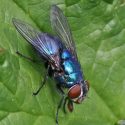
Bottle Flies

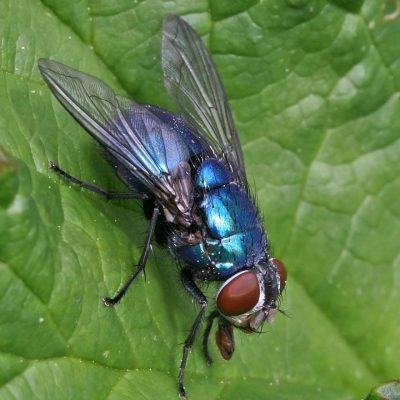
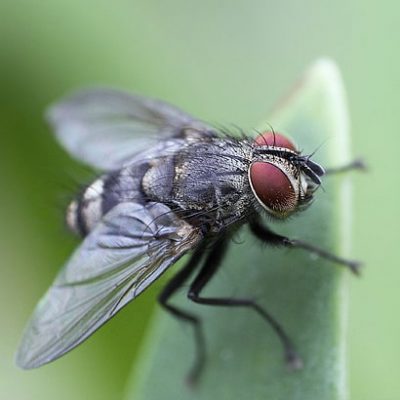
Calliphora Vomitoria

Blue Bottle FLy Calliphora Vomitoria

This common fly is attracted by pet faeces and decaying meat. While adult flies feed on nectar, females deposit their eggs on rotting corpses.

Identify

  • 10–14 mm (twice the size of a housefly.)
  • Red eyes and transparent wings.
  • The head and thorax is a dull grey.
  • Bright metallic blue abdomen with black markings.
  • Red eyes and transparent wings.
  • Long yellow-orange hair-like bristles on the back of the head.

Life Cycle

  • Stages: egg, larva, pupa, and adult
  • Females lays her eggs where she feeds, usually in feces, garbage and decaying meat.
  • Pupae can hibernate during cold weather until warmer weather revives them.
  •  

Habitat

  • Mostly found during spring and summer
  • Refuse areas where exposed garbage becomes a source of food.
  • Near the corpses of dead animals, especially rodents and birds. 

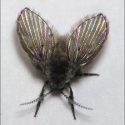
Drain Fly

Psychodidae

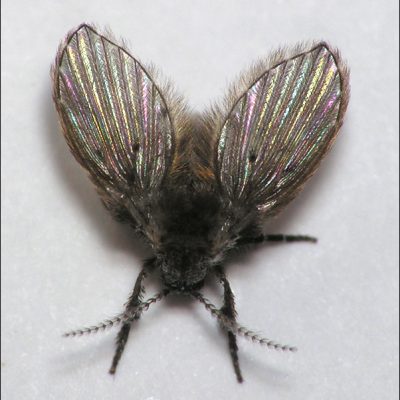
Drain Fly - Psychodidae

Drain flies, sink flies or moth flies thrive in humid environments.

Identify

  • 2 – 4 mm long.
  • Adults have short, hairy bodies and wings which make them appear as tiny moths.
  • Adults have short mouthparts, short antennal segments, and short legs and hold their wings level or sloping downward (rooflike) when at rest.

Life Cycle

  • Larvae development takes 30 – 60 days and takes place in moist microhabitats rich in organic matter.
  • Larvae live in sludge-based habitats (like bathroom sinks) as they feed on bacteria.
  • The adults live for about 20 days.

Habitat

  • Larvae can be found in moist edges of crevices in shower stalls, bathtubs or submerged in toilet water.
  • Adults can be founds near open sinks, bathroom sinks and any other open indoor drain.

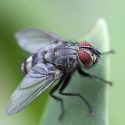
House Fly

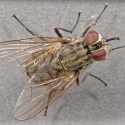
Musca Demostica

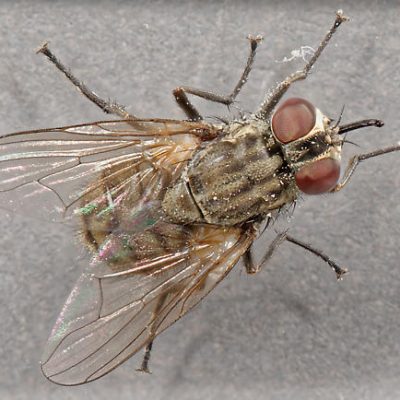
House Fly Musca Demostica

Of the most common flies the house fly easily carries around diseases contaminating everything where it chooses to feed.

Identify

  • 7 – 8 mm long.
  • Grayish in colour with four narrow black stripes on the thorax.
  • Males have a pair of yellowish matches at the base of the abdomen.

Life Cycle

  • Adults live 4 to 12 weeks.
  • Early summer there is a rapid increase in breading and recolonization.   
  • An adult can travel up to 1 km from where it was born to find food or a suitable mate.

Habitat

  • The eggs are laid in almost anything ranging from fresh vegetable to fresh animal manure and pet droppings. 
  •  Garden & home waste that are left exposed. 

Stable Fly

Stomoxys Calcitrans

Stable Fly Stomoxys Calcitrans

Stable Flies are synanthropic, meaning that they exploit habitats and food sources created by human activities such as farming.

Identify

  • 6 – 8 mm long.
  • Wide spotted abdomen.
  • Both males and females partake in blood meals.
    Primarily attacks herded animals.
  • If there are no animals nearby they will attach humans and even dogs.

Life Cycle

  • Females lay their eggs in decaying or rotting matter like manure and hay.
  • The white maggots born from the eggs feed on their environment.
  • Life cycle takes two weeks to complete.  

Habitat

  • Farmlands or anywhere sheep and other cattle are kept.
  • They can be found hovering near manure as this is where they lay their eggs.

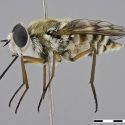
Horse Fly

Family Tabanidae

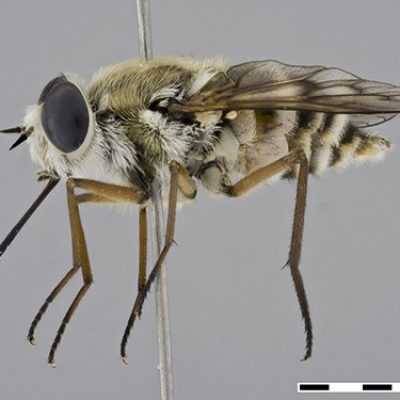
Horse Fly Family Tabanidae

Females have a powerful scissor-like bite that can be very painful to humans and animals.

Identify

  • 5 – 25 mm long.
  • There are no hairs coming from the antenna.
  • mostly dark brown or black, with dark eyes, often with a metallic shine.
  • Males’ compound eyes are closer towards each other than females. 

Life Cycle

  • Adult horse flies feed on nectar and plant exudates, only the females bite animals to obtain enough protein from blood to produce eggs. 
  • Very large and agile in flight.
  • Eggs are laid on stones or vegetation near water,
  • Larvae hatch after 6 days and fall into the water or moist soil below. 

Habitat

  • Horse flies mostly occur in warm areas with suitable moist locations for breeding.
  • Farms and areas where there are livestocks.
  • Wetlands and accessible moisture.