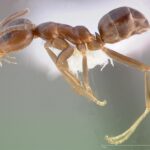
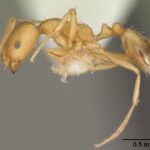
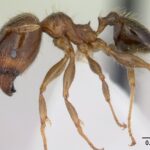
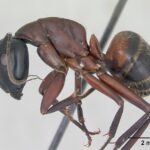
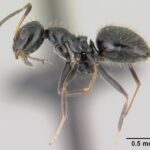
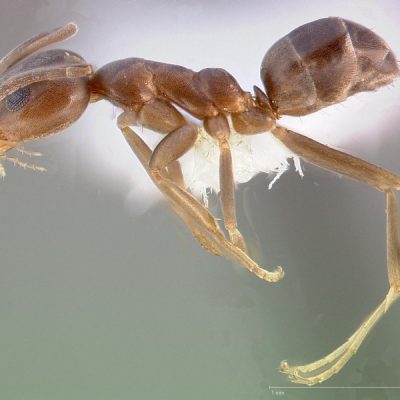
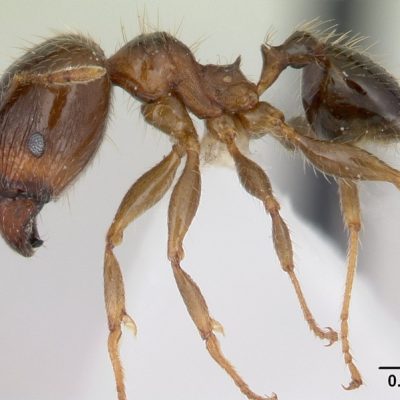
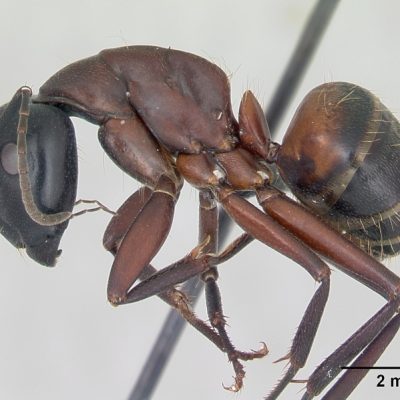
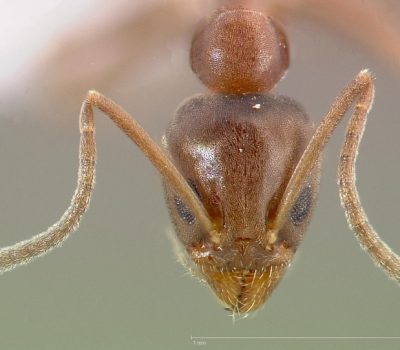
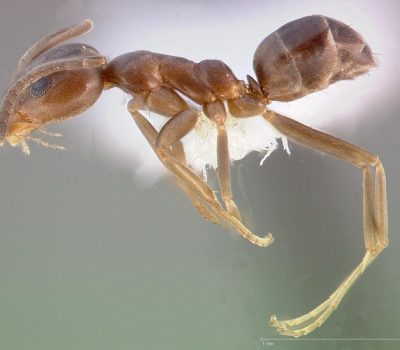
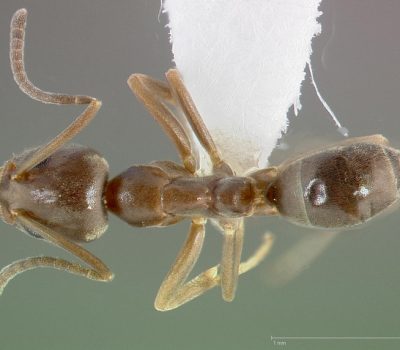
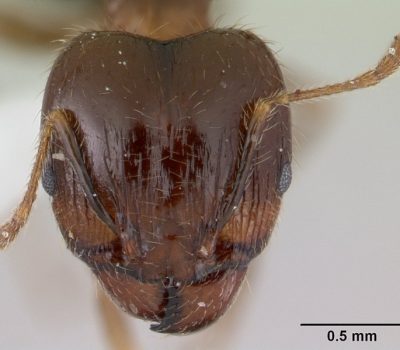
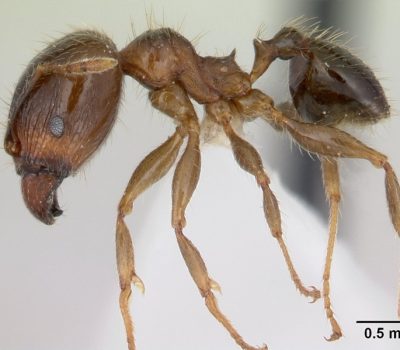
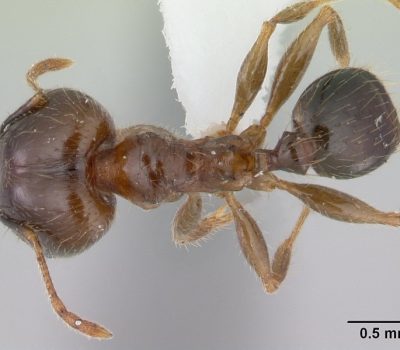
Worker can travel a great distance making it not easy to track the nest.
They prefer sweet foods but will also eat live and dead insects, meats, cereals and damaged fruit.
Argentine ants are territorial and will drive out other ant species from their teritory.
Habitat
Argentine Ants have vast super colonies with multiple kings and queens producing young.
Generally nests in soil but can be also located in covering objects like wood and garbage.
Brown House Ant
Pheidole Megacephala
Identify
Workers of two sides. Minor workers 2 mm (Pheidole capensis).
Huge headed major workers are up to 4 mm (Pheidole megacephala).
Brown to dark Brown.
Life Cycle
Workers are wingless and sterile ants.
Workers build nests, find food supplier, feed larvae, look after eggs and defend the nest.
Males are winged and exist to mate with females.
Females are also winged until after mating and are also the largest in size. Females become the reproductive queen of the colony and live for many years.
Habitat
Most active at night and forages along well-defined trails.
They will nest nest in the lose soil and build their nests near pathways and walls around the house.
Will excavate leaving mounds along foot paths and other areas where the soil is losse.
Will attack foods around the property including meat, sweets, fruit and greasy foods.
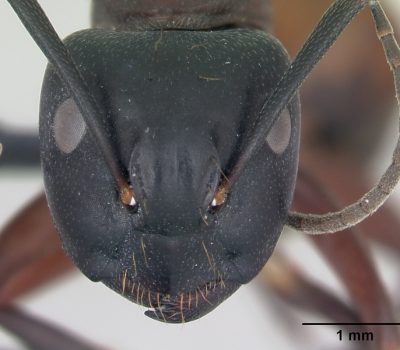
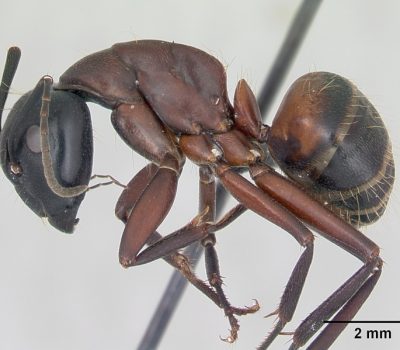
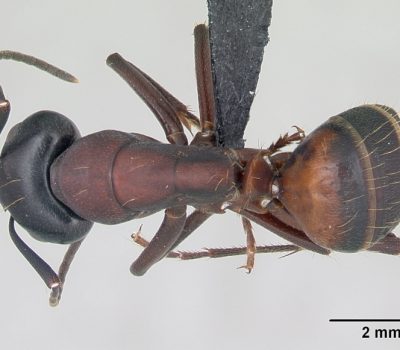
Carpenter Ant
Camponotus spp.
Identify
6 – 12 mm long .
Workers are black or red and black in colour.
Wings, if present; hind wings are shorter than the front pair of wings.
Small circlet of hairs at the tip of the abdomen.
Life Cycle
Workers ants are all sterile females.
After a few years, an established colony will create its first reproductive males and females, which are winged.
In spring, they leave the nest in a “nuptial swarm” to mate nearby. The fertile males die soon after and the mated females disperse to start their own new colony, eventually dropping their wings.
Habitat
Carpenter ants nest in the dead or decaying wood of trees, fire wood, stumps, logs, and dead branches.
Some species nest in the soil.
They also nest in building material weakened by moisture.
While digging, they clean up as they go, pushing the resulting sawdust out of the nest.
Sawdust near a hole in the wood is one sign of a carpenter ant infestation.
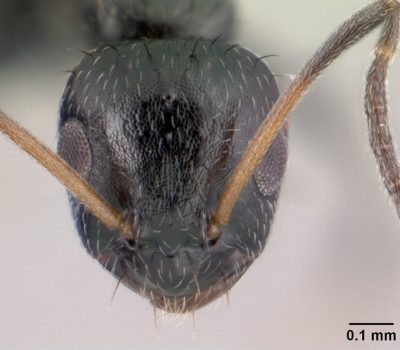
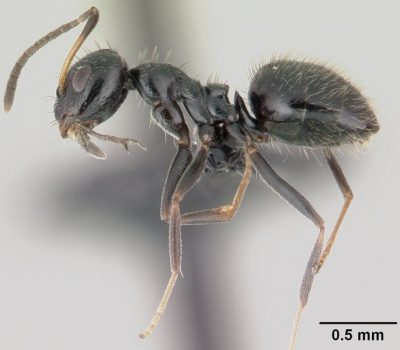
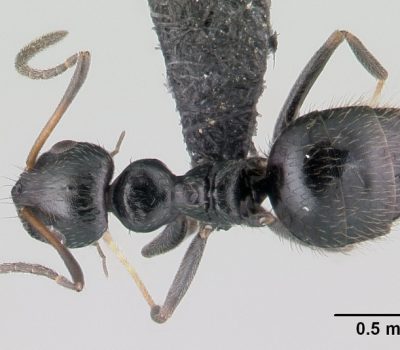
Small Black Ant
Lepisiota Capensis
Identify
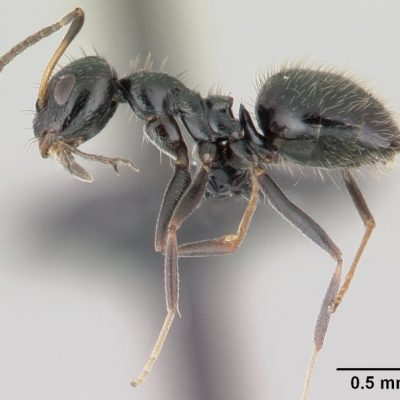
Small 2.2 mm shiny black ants with paler legs.
Workers work 24hours a day 7 days a week foraging.
Life Cycle
Forages along well-defined trails.
Colonies consist out of thousands od workers and many queens.
Can split into multiple colonies if disturbed.
Habitat
They will nest in sheltered soil e.g. underneath paving, stones and in the roots of plants.
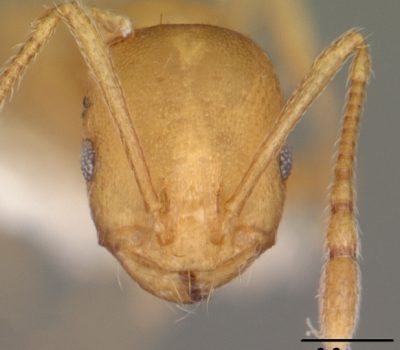
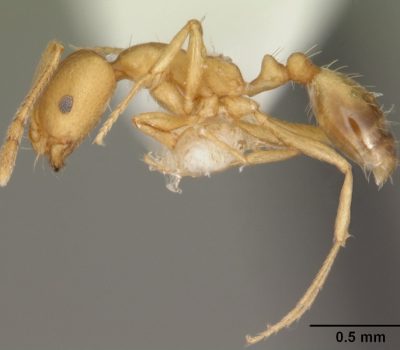
Pharaoh Ant
Monomorium pharaonis
Identify
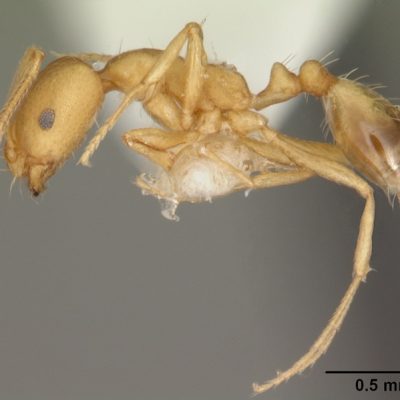
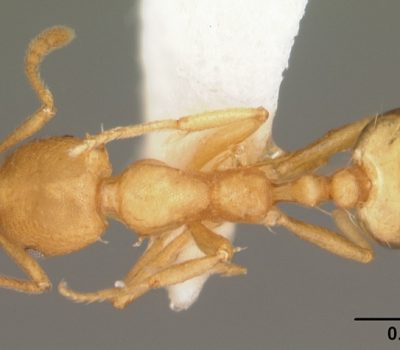
2.2 – 2.4 mm long.
Yellow coloured body to a brown rear.
Life Cycle
Multi-queen colonies.
Swarming can take place at any time of the year.
Winged adults seldom fly so rarely seen. Wings are soon lost after mating.
Each queen produces up to 3,500 eggs in its lifetime.
Habitat
Feeds indoors on high protein foods — meat, fats, blood, dead insects, etc.
New colonies are often formed through nests that have been disturbed.